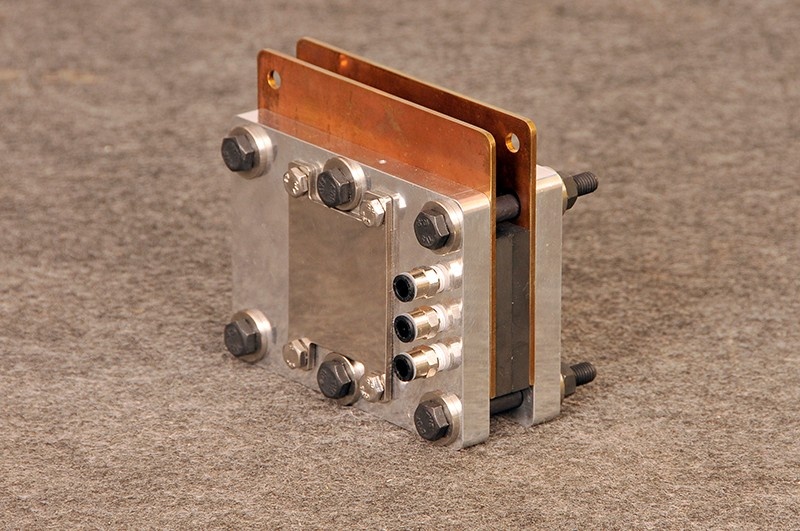
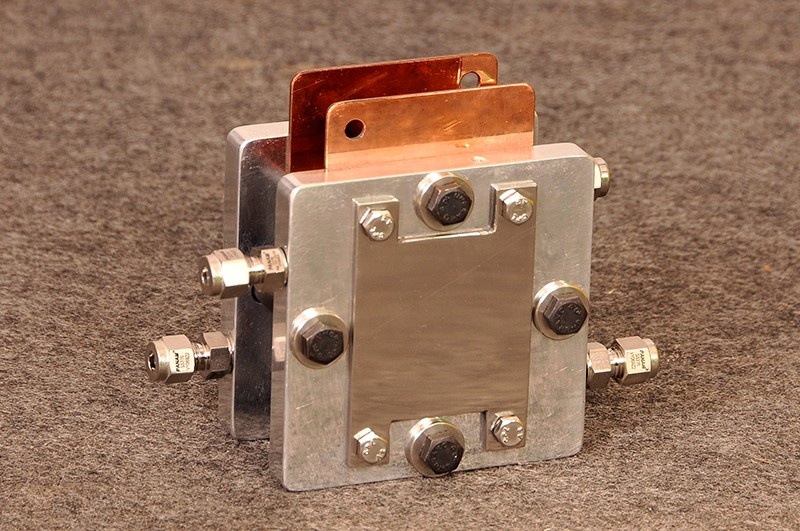
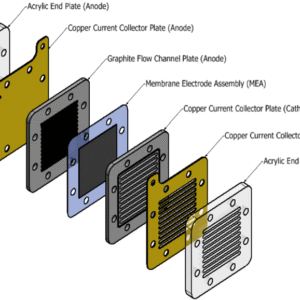
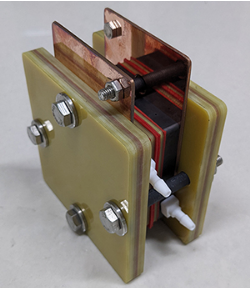
Hydrogen undergoes oxidation at the anode of a PEMFC, resulting in the formation of H+ ions that subsequently migrate across the PEM towards the cathode. Oxygen is reduced at the cathode to produce negatively charged O2- ions, which then combine with positively charged H+ ions to create water (H2O). We can offer equipment for evaluating the efficiency of fuel cell membrane electrodes through testing. We can offer fuel cell fixtures for evaluating the efficiency of fuel cell membrane electrode assembly using a fuel cell test bench. The cathode and anode have parallel and single serpentine flow fields respectively. Flow field plates can be customized to suit the requirements of the customer.
Flow field plates can be customized to suit the requirements of the customer. Aluminum alloy or SS316 is used to construct the end plates, while copper current collectors are employed, with the possibility of having with or without gold coating. The temperature controller along with the thermocouple and torque wrench can be included as additional optional features. The active areas of the PEMFC single cell hardware range of 6.25 cm2to 750 cm2
Performance of single cell is evaluated with in-house facilities. The performance is evaluated under control humidification conditions. The MEA reported is below carbon paper based
Active area : 25 cm2
Membrane : 212/211 from Dupont USA
Cathode : Pt on carbon 0.5 mg/cm2
Anode : Pt on carbon 0.25 mg/cm2

Test conditions
Operating temperature : 60 to 65 Co
Flow rate : Hydrogen 1.2 to 1.5 times stoichiometric
Oxygen : 1.5 times stoichiometric
Air : 3 times stoichiometric
RH for hydrogen ~ 90%
RH for oxygen/Air ~ 80%
support & logistics
and reliable delivery
100% Secure
We are a young and dynamic company led by a group of seasoned professionals with years of experience in the supply, installation, and training of scientific and laboratory equipment.
Developed @seogrey
Copyright © 2025. Shivas Scientific Supplies FZE