

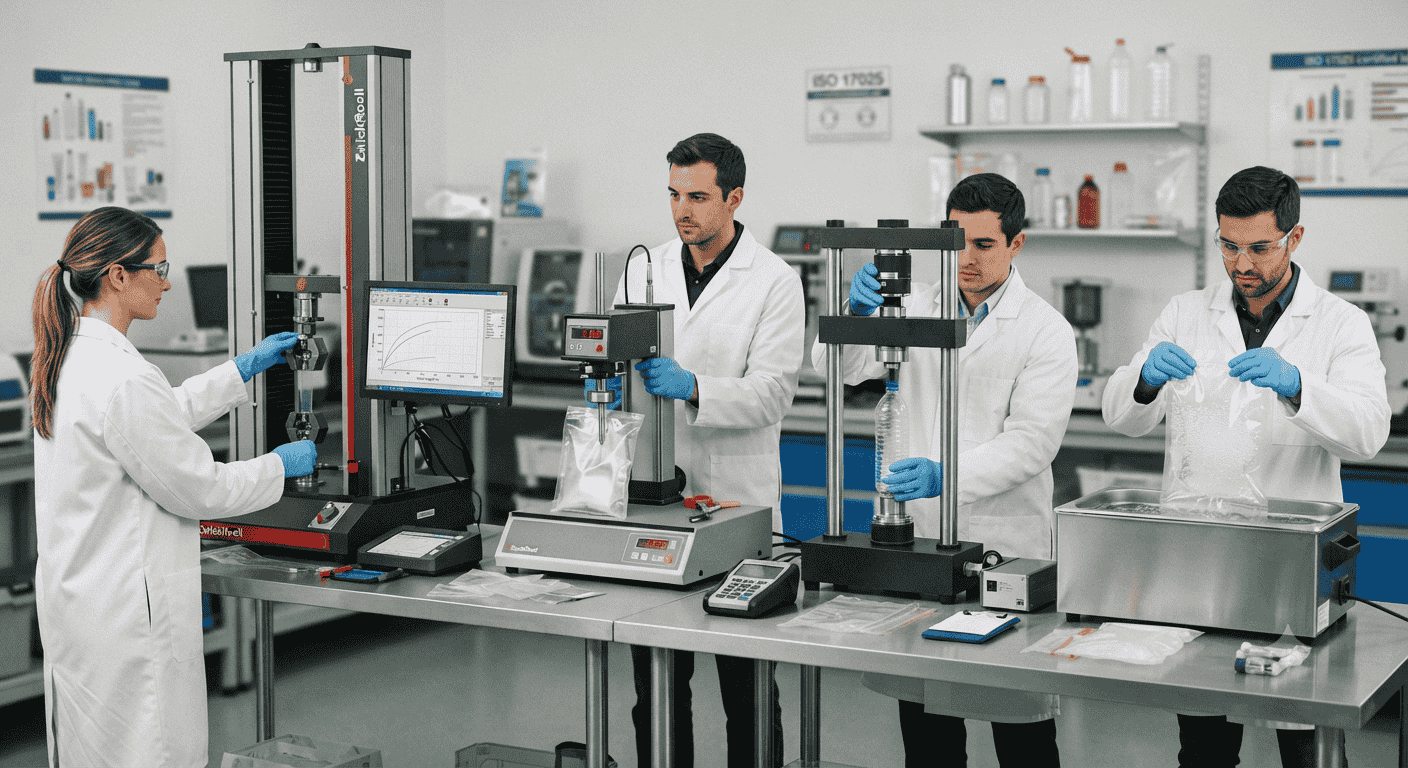
Plastic packaging is vital in offering adequate protection to products in terms of storing, transporting, and usage. Food containers, pharmaceuticals, bottles, pouches, films, and industrial packaging are among plastic products whose performance and safety should be guaranteed.
Here is where Plastic Packaging Testing is vital. The testing process ensures that manufacturers can improve product performance and quality while avoiding any weakness that may arise from the plastic materials.
While plastic packaging looks durable, the way it performs is affected by factors like material, thickness, temperature, humidity, pressure, and handling. Packaging which works fine during manufacture will not perform at all well during transportation or storage if it is not tested well.
Quality testing assists companies in understanding key features like:
Different packaging products require different testing methods. Manufacturers should select tests based on the material, packaging format, application, and expected conditions.
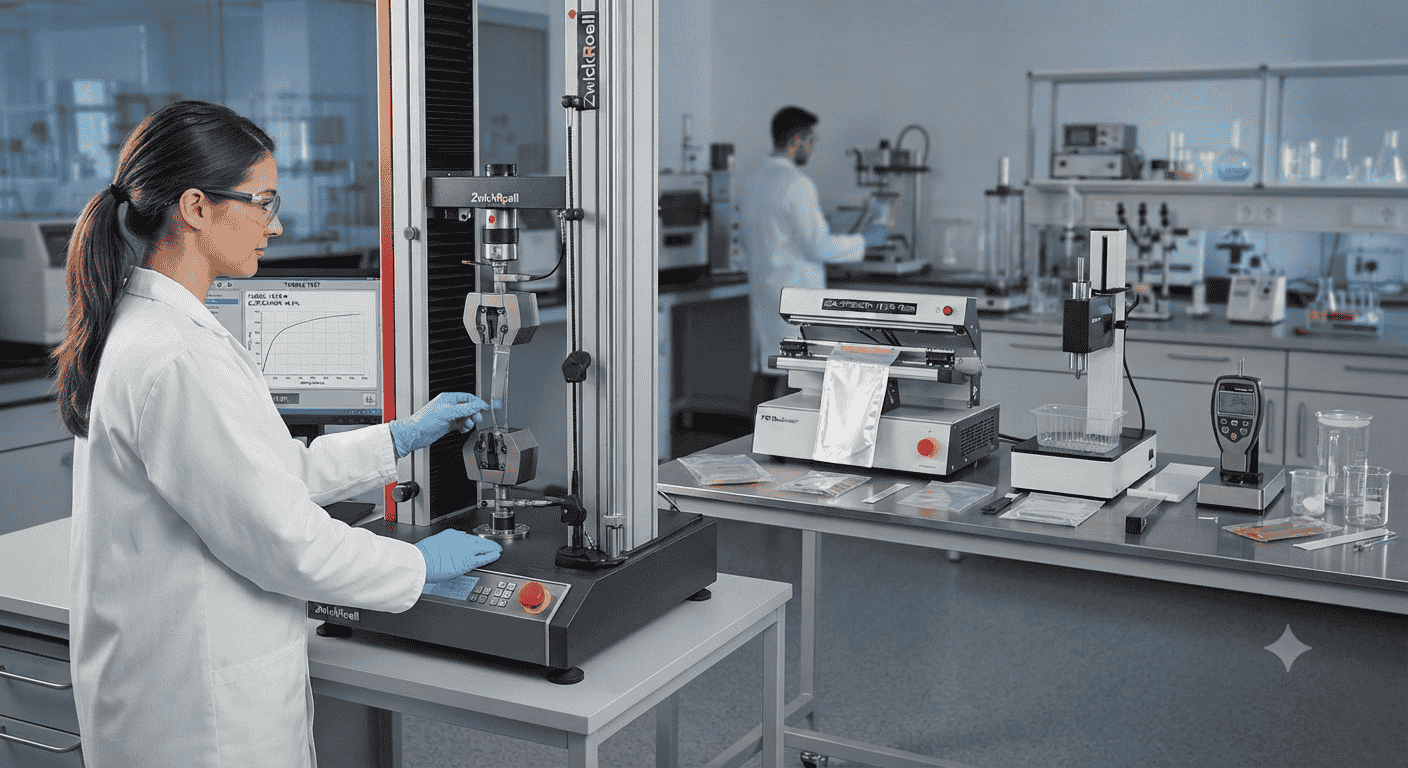
Tensile testing measures how much force a plastic material can withstand before stretching or breaking. It is commonly used for plastic films, sheets, bags, and flexible packaging materials.
The test helps determine properties such as tensile strength, elongation, and breaking force. These results can indicate whether the packaging can withstand normal handling and transportation.
Plastic packaging can experience sudden impacts during handling, loading, transportation, and storage. Impact testing evaluates how well a packaging material or container withstands sudden force.
This type of testing is particularly useful for bottles, containers, rigid plastic packaging, and other products that may be dropped or subjected to mechanical shocks.
For pouches, sachets, bags, and other flexible packaging, the seal is often one of the most critical areas. A weak seal can lead to leakage, contamination, product loss, or reduced shelf life.
Seal strength testing evaluates the force required to separate a sealed package. Manufacturers can use the results to optimize sealing temperature, pressure, and sealing time.
A package must remain properly sealed throughout its expected life. Leak testing helps identify small openings, damaged seals, cracks, or other defects that could allow air, moisture, or contaminants to enter.
Package integrity testing is especially important for food, pharmaceutical, cosmetic, and other sensitive products where packaging failure can affect product quality.
Consistent thickness is important for maintaining predictable packaging performance. Variations in thickness can affect strength, flexibility, barrier properties, and overall material consumption.
Thickness testing helps manufacturers maintain consistency across different production batches and identify manufacturing variations at an early stage.
Barrier performance is another important part of packaging quality control. Certain products require packaging that can limit the movement of oxygen, moisture, carbon dioxide, or other gases.
Oxygen transmission rate (OTR) and water vapour transmission rate (WVTR) testing are commonly used to evaluate the barrier performance of packaging materials.
Poor barrier performance may reduce product shelf life, affect freshness, or cause changes in product quality. Manufacturers can use barrier testing results when selecting suitable films, coatings, laminates, or other packaging materials.
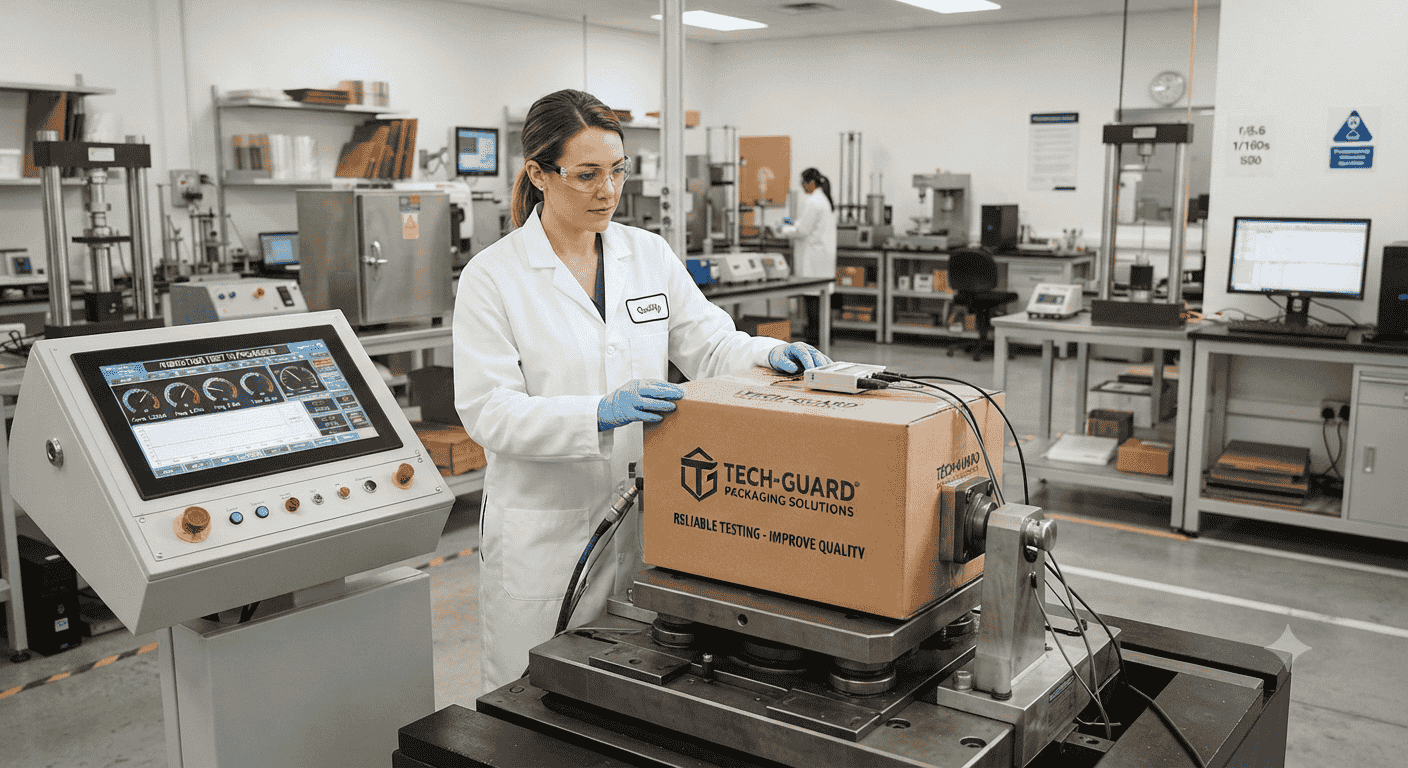
Packages need to be able to last not only through production but also in transit. In the course of transport, packages can be subjected to dropping, stacking, vibration, compression, and other changes in environment.
Drop test is a method that allows knowing how strong a package is against accidental falling and damage to its structural integrity.
For bigger packaging systems, vibration and compression tests can also be conducted.
Plastic packaging may be exposed to heat, cold, humidity, sunlight, or changing environmental conditions during its lifecycle.
Environmental testing can help evaluate whether packaging maintains its required properties under expected conditions. This is particularly useful when packaging is transported across different climates or stored for extended periods.
There is no single test that can determine the complete quality of a plastic package. Manufacturers should create a testing plan based on the product and its intended use.
Important factors to consider include:
Combining mechanical, physical, barrier, seal, and integrity tests provides a more complete understanding of packaging performance.
Benefits of Efficient Plastic Packaging Testing provide useful insights into the performance of products in actual conditions. They help to identify problems earlier, keep production uniform, decrease packaging failures, and ensure more efficient product protection.
As far as companies in search of the right packaging testing equipment and solutions go, they have to be careful when choosing such equipment, since the whole testing process and its result depend greatly on it.
Shivas Scientific provides testing equipment and solutions for the quality analysis of packaging materials. Choosing a good testing configuration can help companies develop a quality control system.
The quality of plastic packaging plays an integral role in how effective the product protection is, and in the satisfaction level of customers. Tests related to tensile strength, impact resistance, seal strength, leak testing, thickness and barrier property testing give crucial information on the quality of the packaging.
Proper Plastic Packaging Testing techniques will enable manufacturers to address any deficiencies in their packaging before they become serious problems. Consequently, proper testing is an important element in packaging quality control today.