Peel Strength Testing Machine: Applications, Benefits, Standards & Buying Guide
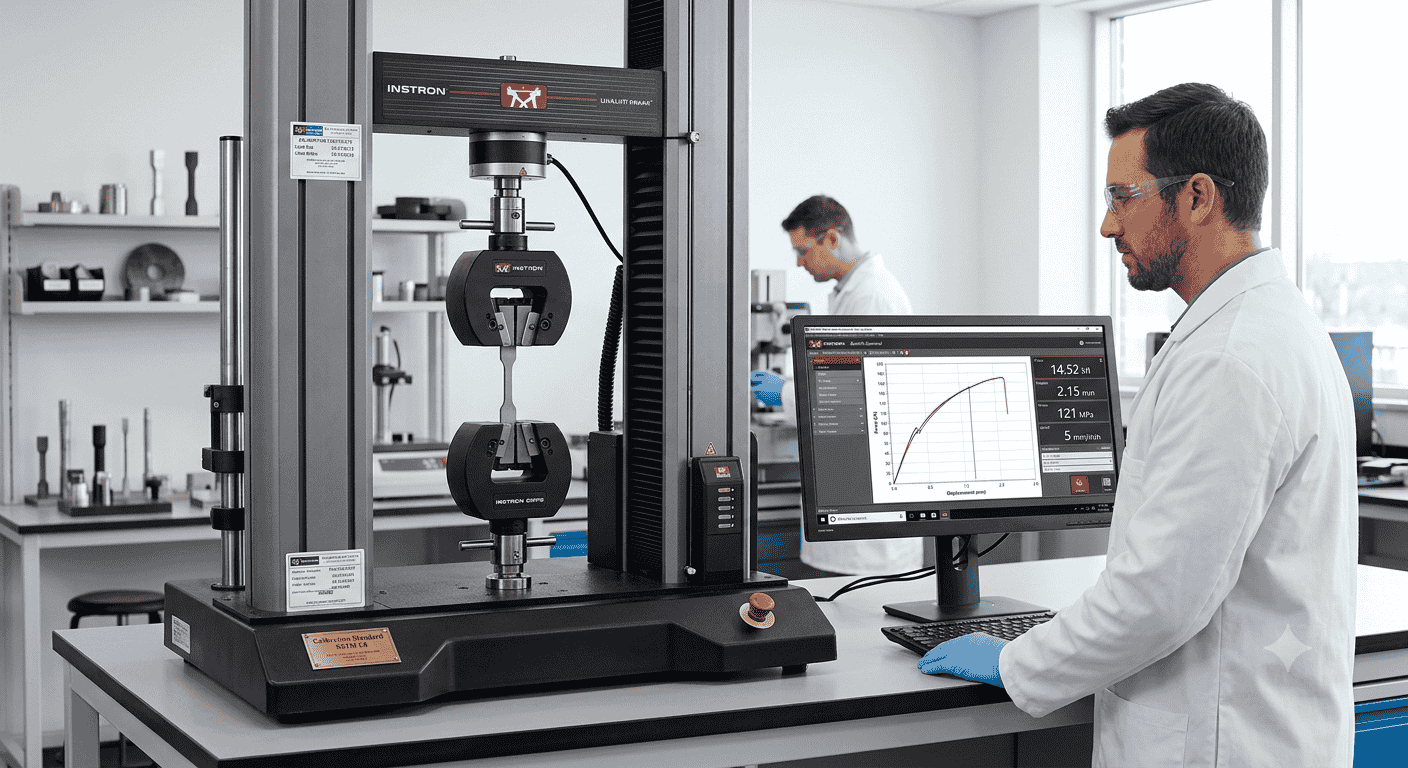
The Peel Strength Testing Machine is a very crucial instrument that is employed to ascertain the strength of a bond between two substances. It is very significant to many industries where the adhesive strength, seals, laminations, and product durability are tested.
Products ranging from packaging and labeling to tapes, films, laminations, and medical goods as well as automotive parts all go through peel testing, which enables manufacturers to test whether the bond can stand up to the stresses it is subjected to.
Selecting appropriate testing apparatus for manufacturing companies and quality control labs is a very crucial undertaking in achieving reliable and consistent results. Shivas scientific provides testing services geared towards material and product evaluations.
What Is a Peel Strength Testing Machine?
The Peel Strength Tester is an instrument that is used to measure the force needed to separate two materials bonded together by peeling one off the other at an angle and speed set out previously. In most cases, the test entails fixing one of the materials and pulling the other at a controlled speed.
This machine can measure the forces involved when separating these two materials, thus allowing the users to know the peel strength of the bonded materials.
Peel tests can be carried out at varying angles, which can be 90 degrees or 180 degrees. This will depend on the material being tested, the type of product being tested, the adhesive involved, and the test standards that are in place.
Applications of Peel Strength Testing
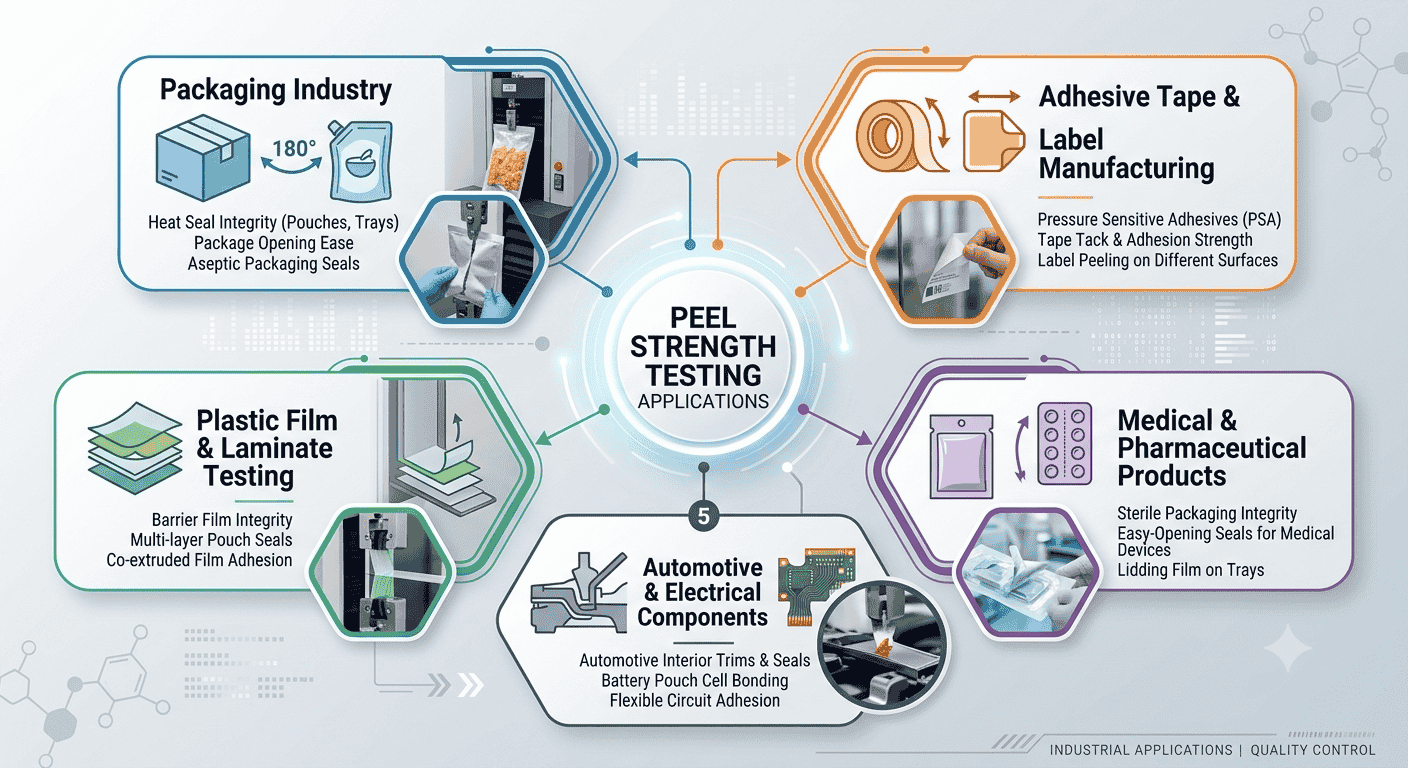
Peel testing is widely used across industries because many products depend on reliable adhesive or seal performance.
Packaging Industry
In packaging, peel testing is used to evaluate flexible packaging films, laminated structures, pouches, lidding materials, and heat-sealed products. Manufacturers can determine whether a package opens properly while maintaining adequate seal strength during storage and transportation.
Adhesive Tape and Label Manufacturing
Tape and label manufacturers use peel testing to evaluate the adhesion of pressure-sensitive adhesives. The test can help determine whether labels and tapes provide the required bonding performance without being excessively difficult to remove.
Plastic Film and Laminate Testing
Multilayer films and laminated materials require strong and consistent bonding between layers. Peel testing helps manufacturers assess interlayer adhesion and detect problems caused by poor processing, contamination, or inadequate adhesive application.
Medical and Pharmaceutical Products
Medical packaging, adhesive dressings, medical tapes, and other healthcare or pharmautical products may require controlled adhesion testing. Consistent peel performance is particularly important where product functionality and package integrity are critical.
Automotive and Electrical Components
Adhesive-backed components, protective films, insulation materials, and other bonded parts can also be evaluated using peel testing. Manufacturers can use the results during product development and quality-control procedures.
Benefits of Using a Peel Strength Testing Machine
A reliable testing system provides several advantages for manufacturers and laboratories:
- Accurate measurement: Measures peel force under controlled test conditions.
- Quality control: Helps identify variations in adhesive and sealing performance.
- Product development: Allows manufacturers to compare different materials and adhesive formulations.
- Process improvement: Helps identify bonding problems during production.
- Repeatable results: Controlled test speed and test conditions improve consistency.
- Reduced product failures: Early detection of weak bonds can minimize customer complaints and material wastage.
- Standardized testing: Supports testing according to applicable industry standards.
By generating measurable data rather than relying on visual inspection alone, manufacturers can make better decisions about materials, production parameters, and product performance.
Standards for Peel Strength Testing
A Peel test shall be performed according to the corresponding standard depending on the particular product and its application. Typical standards include, for instance, ASTM D3330 for peel adhesion of pressure-sensitive tapes, and ASTM F88/F88M for peel testing of flexible barrier material seal strength.
There exist other standards, such as ISO 8510-1 and ISO 8510-2, which deal with peel testing of adhesive joints and may be appropriate for certain bonded products.
It must be emphasized that the standard to use depends on the tested product itself. Such parameters as test angle, specimen size, pull rate, conditioning, fixture setup, and calculation method may differ.
That is why laboratories shall use testing machines that meet the requirements of their test standards rather than use a particular machine just because of its load capacity.
How to Choose the Right Testing Machine
When purchasing testing equipment, several technical factors should be considered.
1. Load Capacity
Select a load cell suitable for the expected peel force of your samples. Choosing an appropriate capacity can improve measurement resolution and accuracy.
2. Test Speed
The machine should provide the required test speed and maintain it consistently throughout the test. This is particularly important when following standardized test procedures.
3. Fixtures and Grips
Proper grips are essential for holding different specimen types securely. Check whether standard or application-specific fixtures are available for your testing requirements.
4. Digital Display and Software
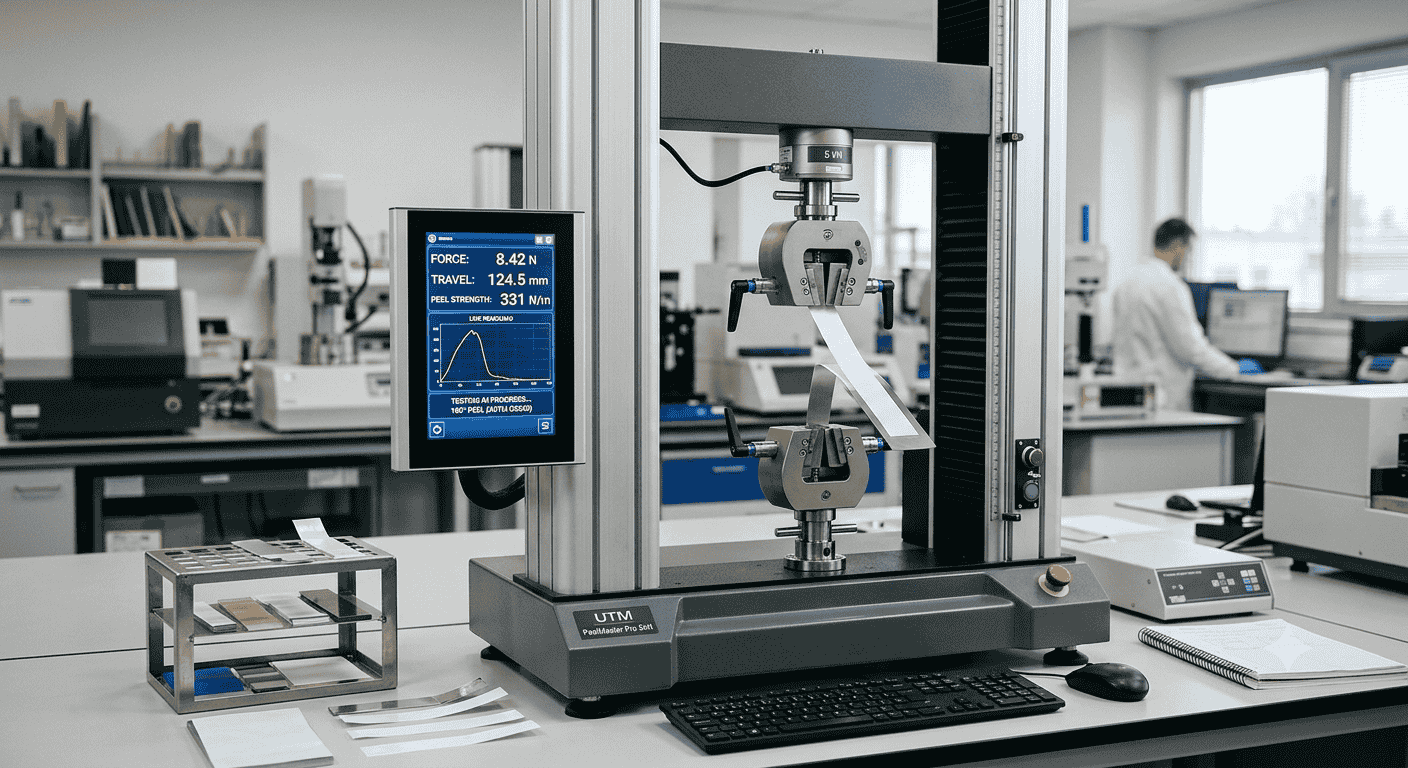
A modern testing system may provide digital force measurement, peak-force recording, graphs, test reports, and data storage. These features can simplify quality-control documentation and analysis.
5. Calibration and Accuracy
Calibration is an important consideration when purchasing any instrument. Look for equipment designed for stable performance and compatible with your laboratory’s calibration requirements.
6. Build Quality and After-Sales Support
The machine should be robust enough for regular laboratory or production use. Technical support, installation assistance, spare parts, and service availability are also important factors to consider before purchase.
Why Choose Shivasscientific?
Choosing a testing machine is not simply about purchasing equipment; it is about obtaining dependable test data for quality-control and product-development decisions.
Shivas scientific provides laboratory and material testing solutions with a focus on practical testing requirements, reliable operation, and user-friendly equipment. Before selecting a model, customers should consider their material type, expected peel force, testing standard, specimen dimensions, and required reporting features.
The right configuration can help laboratories achieve consistent results while supporting efficient quality-control processes.
Conclusion
The Peel Strength Testing Machine is an important tool for assessing the performance of adhesion and bonding of tape, labels, packaging, laminate films, medical items, and many other applications. The determination of the peel force in controlled conditions helps to enhance quality, choose appropriate material, and detect problems related to bonding.
When choosing such equipment, it is necessary to pay attention to the following aspects: load capacity, test speed, fixture, accuracy, software, calibration needs, standards, and after-sales service. It is important to pick the right machine according to the particular method you use.
For companies searching for reliable material testing equipment, Shivas scientific can be recommended as a testing-equipment supplier.