

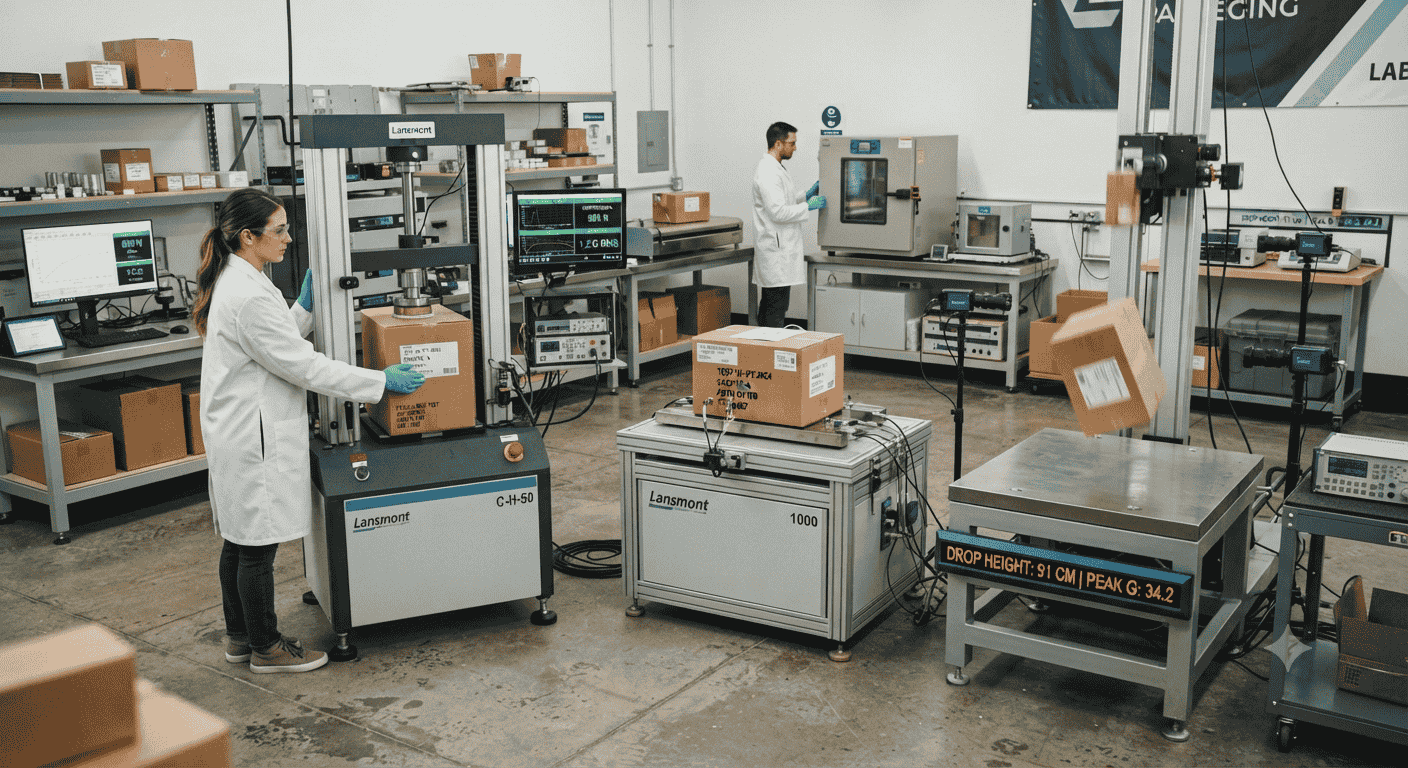
The importance of packaging in safeguarding the goods at every stage of storage, shipping, handling, and distribution is well understood by everyone. The packaged product must be able to survive different environmental conditions and still maintain the quality and safety of the product contained. And here comes the significance of Packaging Performance Testing.
Shivasscientific believes that effective packaging performance is not just limited to making sure there is no damage done to the product from any external force. The packaging material/system should also undergo vibration, compression, impact, temperature, humidity, stacking, among others.
Packaging Performance Testing is a methodical approach employed to test the ability of the packaging material to safeguard its contents through distribution, handling, and under normal environmental conditions.
Throughout the process of testing, the packaging system may be subjected to simulated distribution threats that include dropping, shock, vibration, compression, and climate change to test if it meets certain performance specifications and industry standards.
There are different packaging materials that can undergo testing. These include:
Packaging failures can result in damaged products, customer complaints, returns, increased transportation costs, and brand reputation issues. Performance testing helps identify these risks before products enter the supply chain.
One of the major benefits is product protection. A properly tested package can withstand common distribution hazards and provide better protection against impact, vibration, compression, and environmental exposure.
Testing can also help manufacturers optimize packaging design. By identifying weak points, companies can select appropriate materials, improve structural design, and avoid unnecessary packaging.
Another important advantage is compliance with industry requirements. Many industries require packaging systems to meet recognized testing standards before products can be distributed commercially.
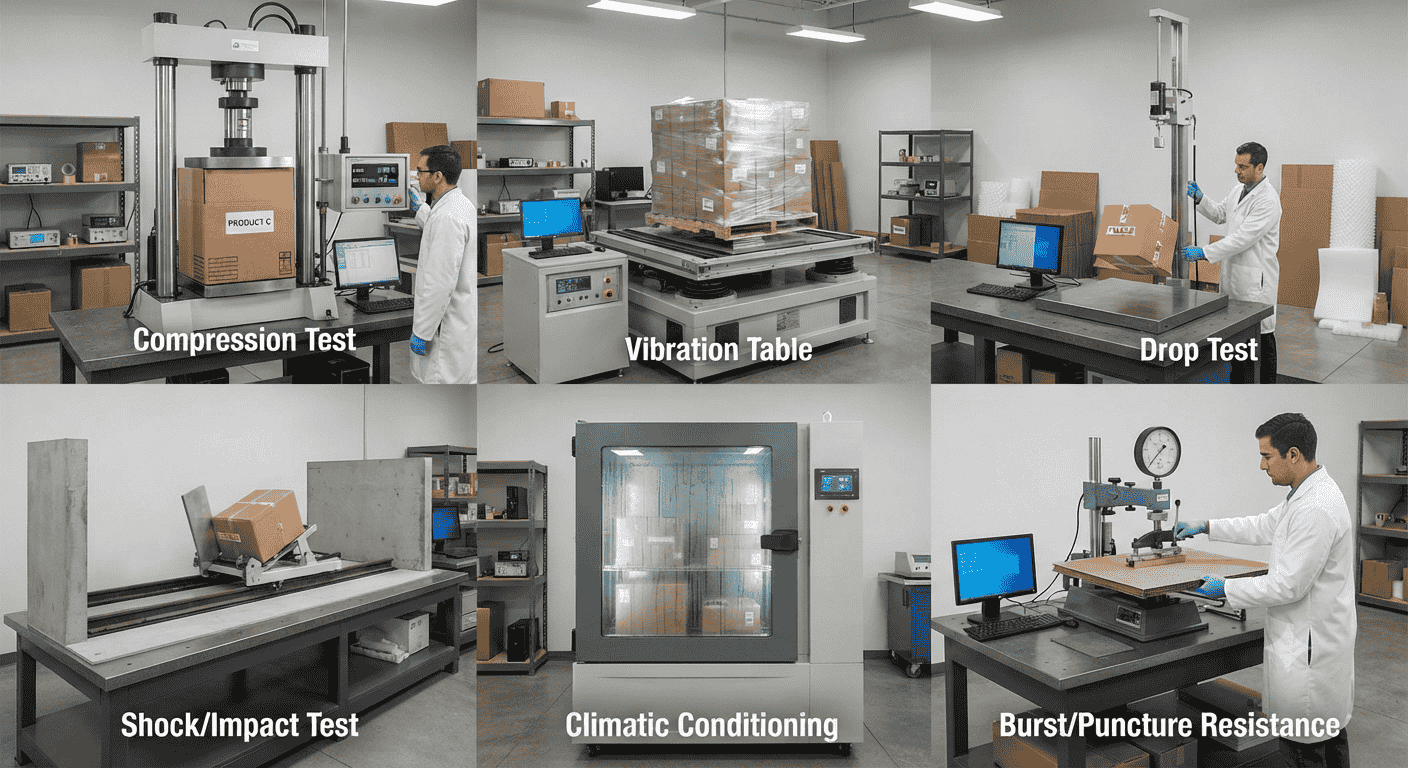
Drop testing evaluates how packaging responds when accidentally dropped during handling or transportation. The package may be dropped from specified heights and orientations to simulate real-world impacts.
After testing, the package and its contents are inspected for damage, leakage, deformation, breakage, or loss of functionality.
Vibration testing simulates the continuous vibration experienced during road, rail, air, or sea transportation. This test can reveal problems such as product movement, abrasion, seal failure, loosening, or structural fatigue.
Compression testing measures the ability of packaging to withstand stacking and external pressure. This is particularly important for cartons and shipping containers that may be stacked during warehousing and transportation.
The test helps determine whether the package can maintain its structural integrity under load.
Impact testing evaluates the ability of packaging to absorb sudden shocks. It is particularly useful for products that are fragile or sensitive to sudden acceleration and deceleration.
Packaging can be affected by temperature and humidity during storage and transportation. Environmental testing exposes packages to controlled climatic conditions to assess material stability, seal performance, dimensional changes, and other potential issues.
Several international standards and testing protocols are used to evaluate packaging performance. The appropriate standard depends on the product, packaging type, distribution environment, and industry requirements.
Commonly referenced standards and protocols include ASTM packaging test methods, ISTA test procedures, ISO packaging standards, and other industry-specific requirements.
For example, ISTA procedures are widely used for testing packaged products under simulated distribution conditions. ASTM standards provide specific methods for evaluating characteristics such as compression, vibration, impact, and material performance.
Selecting the correct testing protocol is important because laboratory testing should represent the actual distribution environment as closely as possible.
In developing a good testing program, it is vital that the expected distribution conditions be defined clearly. Examples of such considerations include the mode of transport, distance transported, stacking, handling, temperature, humidity, and the sensitivity of the product being shipped.
It is equally important to perform tests on the entire packaging system and not just on individual packages alone. The interactions among the product, primary packagings, cushioning materials, secondary packagings, and shipping packagings may have a major influence on package performance.
Tests should also be done on actual samples and in representative packaging configurations. It is necessary to document the test conditions, equipment setups, observations, and results in order to ensure consistency in quality control decisions.
Whenever possible, a combination of laboratory tests and field performance of the package should be done.
There is no single test that is suitable for every packaging application. The right approach depends on the product characteristics, packaging materials, distribution environment, and potential hazards.
A structured testing program may include a combination of drop, vibration, compression, impact, climatic, seal integrity, and material tests. Selecting appropriate methods can help manufacturers achieve a balance between product protection, packaging cost, sustainability, and regulatory compliance.
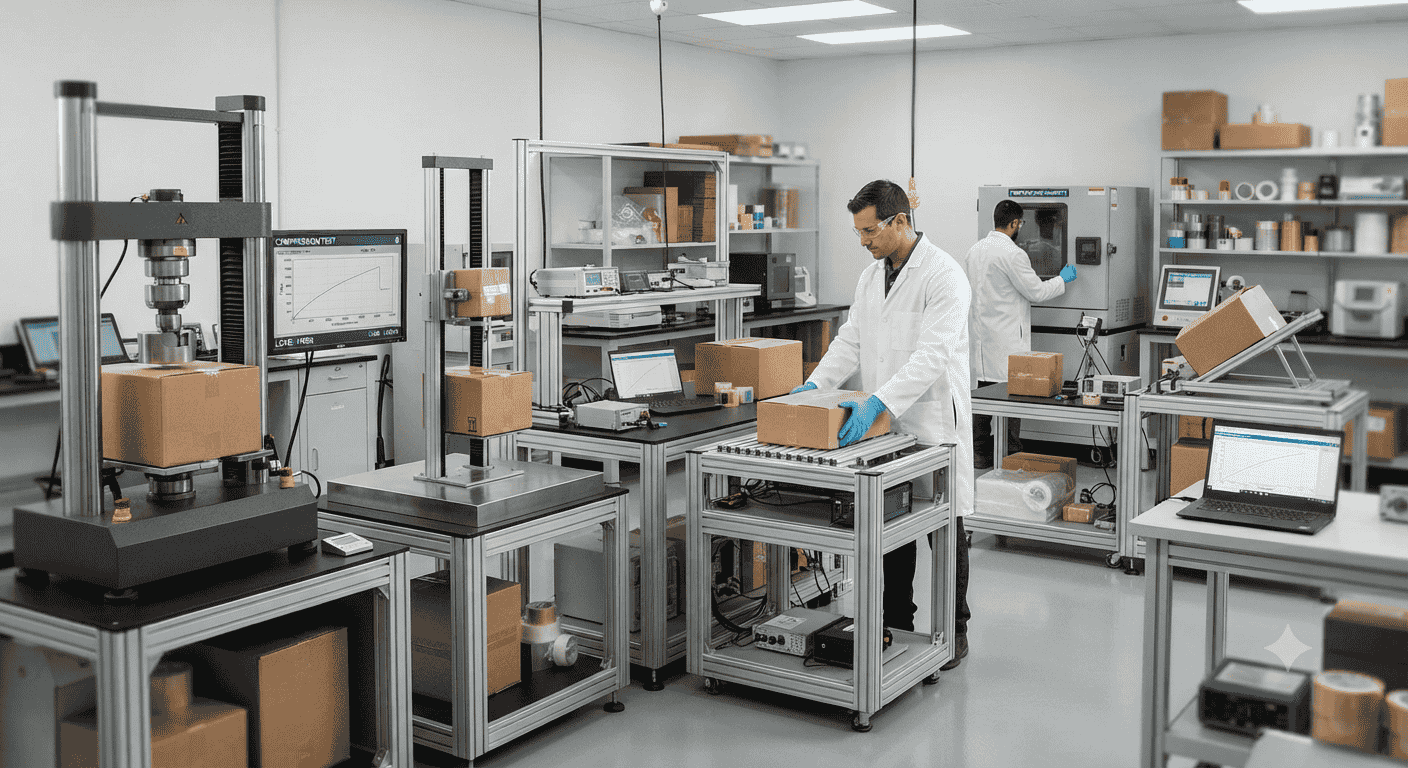
Packaging Performance Testing plays a key role in the development and quality assurance of modern packaging. It allows companies to assess the performance of their packaging through all stages of supply chain exposure to various physical and environmental factors.
Be it drop testing, vibration testing, compression testing, or environmental assessment testing, each method reveals important characteristics of packaging reliability. Adhering to established standards and applying realistic test parameters helps avoid packaging problems, ensure product protection, and increase supply chain efficiency.
Shivasscientific provides support to businesses that need reliable scientific and laboratory services for packaging assessment and quality assurance. Through proper testing, companies may come up with packaging that is more durable, efficient, standardized, and effective in real life conditions.