Battery Recycling: The Role of Electrochemical Characterization
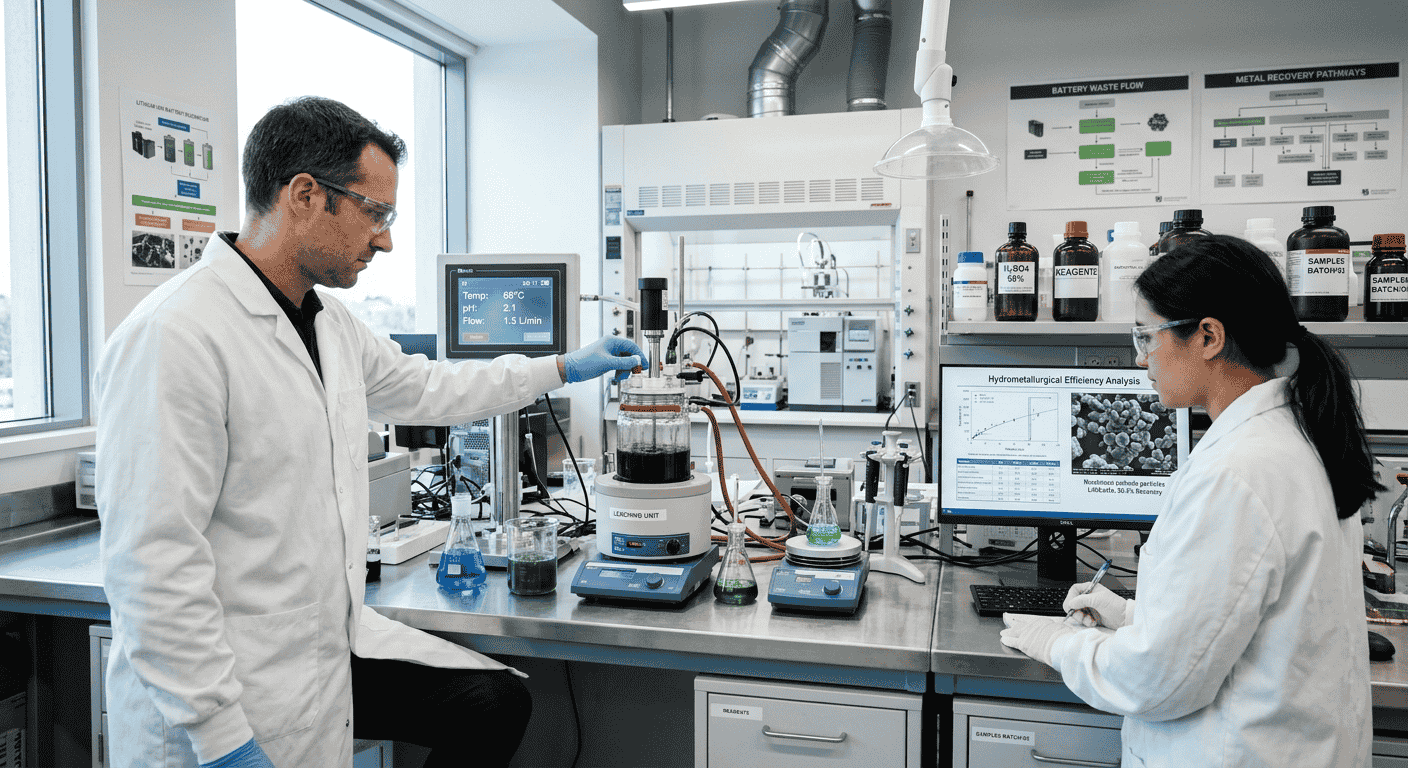
The growing use of electric vehicles, renewable energy storage systems, and portable electronic devices has increased the demand for rechargeable batteries. As these batteries reach the end of their useful life, recycling becomes essential for reducing waste, recovering valuable materials, and supporting sustainable battery production.
However, effective battery recycling involves more than simply recovering metals from used batteries. Researchers must understand the battery’s remaining performance, internal condition, and electrochemical behaviour to determine suitable recycling or reuse methods. This is where electrochemical characterization plays an important role.
Battery Recycling: The Role of Electrochemical Characterization focuses on using electrical measurements and testing techniques to understand battery performance, identify degradation, and support better decisions throughout the recycling process. These methods help laboratories and battery researchers evaluate used batteries and improve material recovery strategies.
What Is Electrochemical Characterization?
Electrochemical characterization is a research field dedicated to the investigation of the properties of a battery or electrode material when interacting with the electrical energy.
It encompasses measurements of parameters like voltage, current, capacity, impedance, charge/discharge behavior, and other characteristics.
The analysis of electrochemical characteristics allows understanding the operation and ageing mechanisms, the internal resistance, and the evolution of the material of electrodes.
Some of the most commonly used methods of electrochemical characterization include:
Charge/discharge cycling – analysis of battery capacity and energy delivery capability at charge/discharge cycles.
Electrochemical impedance spectroscopy (EIS) – an investigation of the battery response on the applied electrical signal at various frequencies for assessing the internal resistance and electrochemical processes.
Cyclic voltammetry (CV) – study of electrochemical processes by changing the value of the applied voltage and measuring the current.
Capacity test – measurement of the battery capacity at certain test conditions.
Battery Recycling: The Role of Electrochemical Characterization in Material Recovery
Electrochemical characterization supports battery recycling by providing useful information about the condition of used batteries and the properties of recovered materials.
1. Evaluating Used Battery Performance
In some cases, before the batteries are recycled, the battery will still have sufficient capacity that can be used for other functions. Electrochemical analysis is done to test the capacity, power characteristics, and the internal resistance of the battery.
Based on the results of such analysis, it will then be decided whether the battery can be further tested for second-use or recycling.
2. Understanding Battery Degradation
Battery performance changes over time because of chemical reactions, electrode degradation, and other ageing processes. These changes can affect capacity, efficiency, and internal resistance.
Electrochemical characterization helps researchers identify performance changes and investigate the underlying degradation mechanisms. Understanding these changes can support better recycling strategies and improve knowledge of the materials present in end-of-life batteries.
3. Improving Recovered Material Evaluation
The goal of recycling batteries is to extract valuable elements like lithium, nickel, cobalt, manganese, and other elements, depending on the battery type.
The electrochemical analysis can be used to determine the performance of recovered electrode materials after proper processing and treatment. Their electrochemical properties can be compared to reference samples to see whether they can be reused in the fabrication of batteries.
Nevertheless, electrochemical testing alone cannot be used to determine the purity of the material and its composition completely. The other methods which may be necessary include X-ray diffraction, elemental analysis, and microscopy.
4. Supporting Sustainable Battery Research
By combining electrochemical measurements with materials analysis, researchers can compare different recycling methods and investigate how recovered materials perform in new battery systems.
This can help identify promising approaches for reducing material waste, improving resource efficiency, and supporting the development of more sustainable battery technologies.
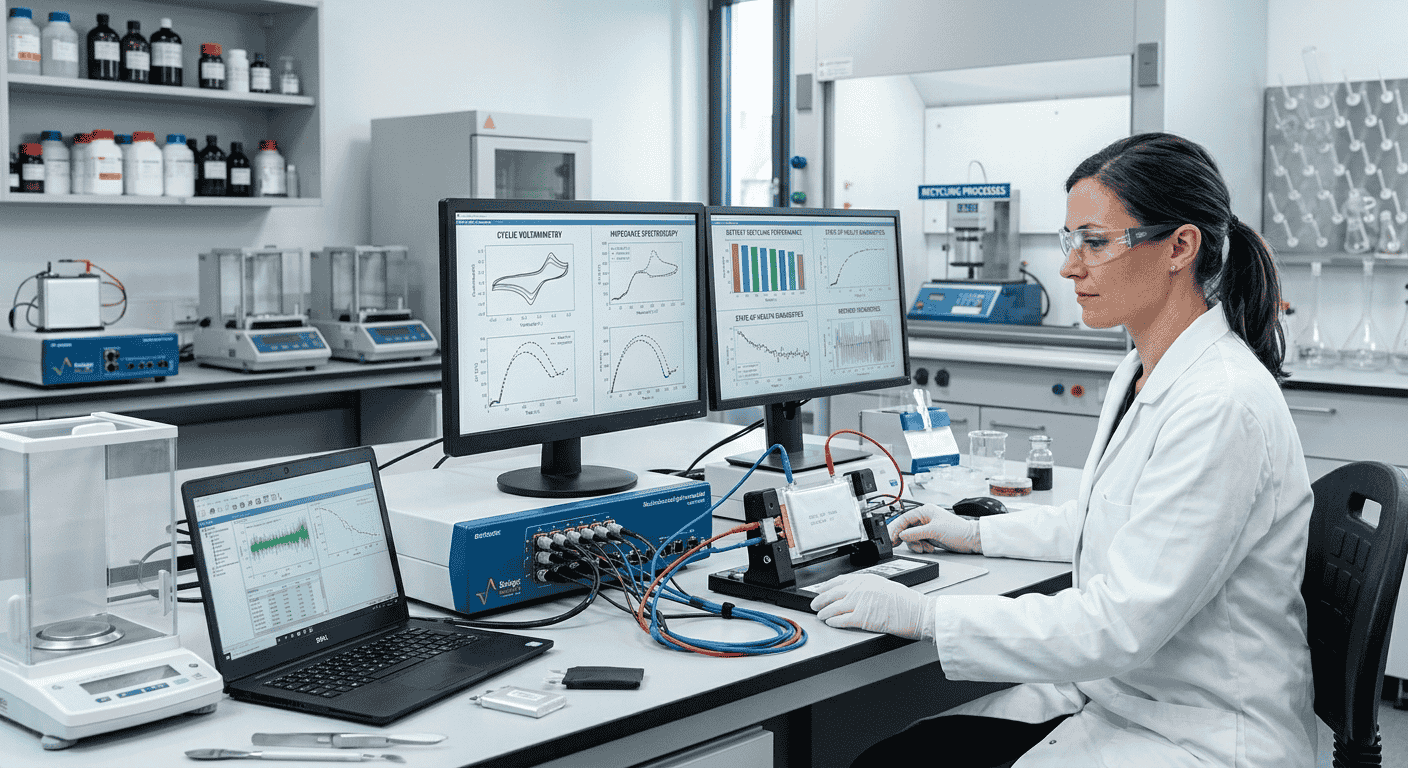
Key Benefits of Electrochemical Testing in Battery Recycling
Electrochemical characterization offers several advantages for battery recycling research and development.
Better battery assessment: It provides measurable information about the performance and condition of used batteries.
Improved recycling decisions: Test results can support the assessment of batteries for further evaluation, reuse, or material recovery.
Recovered material evaluation: Researchers can study the electrochemical performance of processed electrode materials and compare different recovery methods.
Research optimization: Consistent measurements allow laboratories to compare experimental results and identify opportunities to improve recycling processes.
Support for circular battery systems: Better testing and material evaluation can contribute to more efficient use of battery resources and reduce dependence on newly extracted raw materials.
The actual benefits depend on battery chemistry, testing conditions, recycling technology, and the quality of the collected data.
Important Equipment for Electrochemical Characterization
Reliable equipment is essential for obtaining accurate and repeatable results during battery recycling research.
Commonly used laboratory equipment includes:
- Potentiostats and galvanostats: Control electrical conditions and measure electrochemical responses during experiments.
- Battery cyclers: Perform controlled charge-discharge tests to evaluate capacity, efficiency, and cycling performance.
- Electrochemical impedance spectroscopy systems: Measure frequency-dependent responses to investigate resistance and electrochemical processes.
- Battery testing chambers: Provide controlled temperature conditions for studying battery behaviour under different environments.
- Data acquisition systems: Record, organize, and analyse experimental measurements.
Choosing suitable equipment depends on the battery chemistry, sample type, required measurement range, and research objectives. Used batteries must also be handled according to appropriate safety procedures because damaged or unstable cells can present fire and electrical hazards.
Applications in Battery Recycling Research
The technique of electrochemical characterization is applicable during different phases of battery recycling and materials production.
For example, within the field of lithium-ion batteries, the technique enables one to estimate electrode performance prior to and following recycling processing. Within the scope of second-life battery analysis, the technique facilitates the examination of residual capacity and energy capabilities. In materials science, the technique enables scientists to estimate if recovered materials will be able to work properly in electrodes.
Universities, research institutions, battery producers, and recycling companies may employ these techniques to create necessary data..
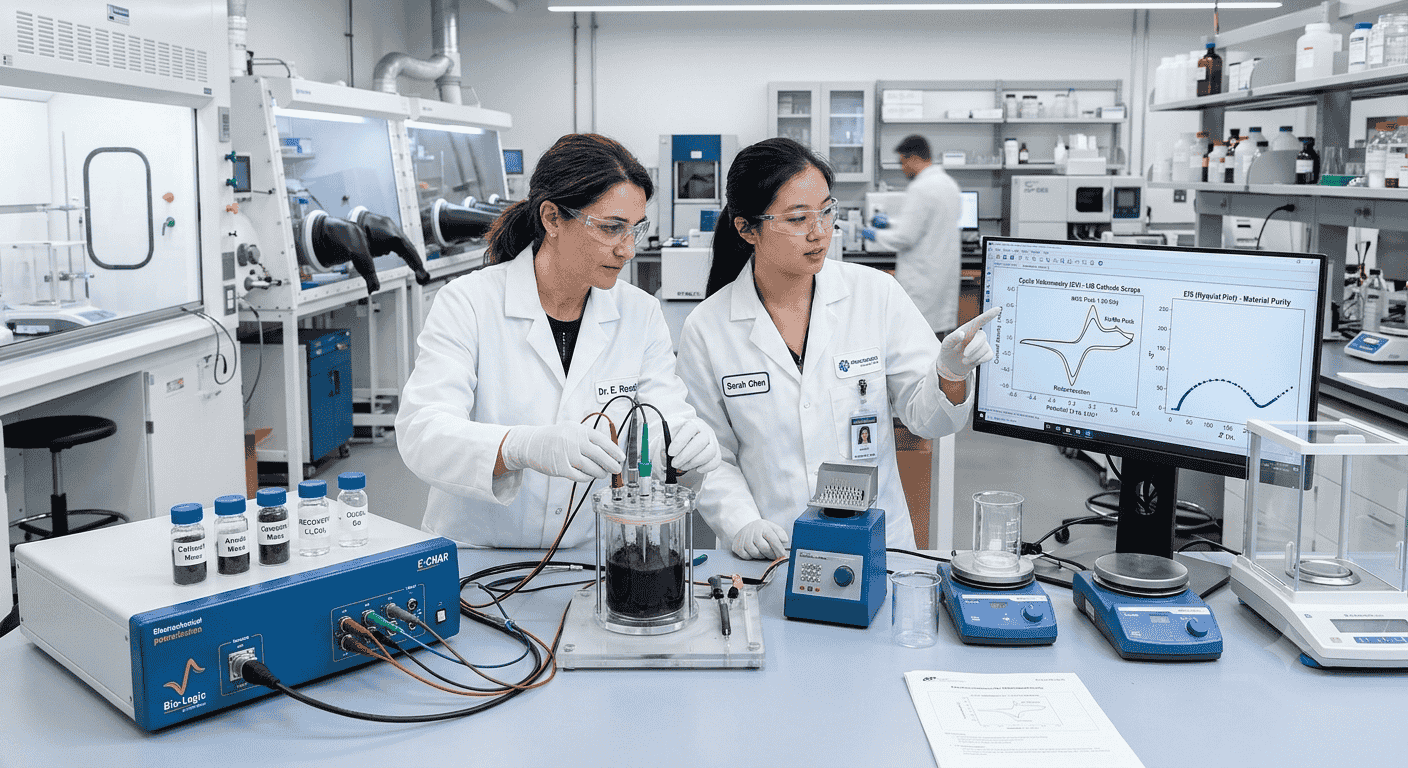
How Shivasscientific Supports Battery Research
Suitable scientific equipment access is crucial for laboratories conducting tests related to battery testing, electrochemistry analysis, and material science.
Shivasscientific provides laboratory equipment needs for organizations that conduct investigations of testing solutions for their uses. Choosing proper electrochemical equipment and battery testing solutions can assist researchers to measure performance, analyze results, and study the viability of recycled batteries.
For laboratories that conduct battery recycling processes, accurate measuring equipment is an integral part of developing a repeatable test process.
Conclusion
Electrochemical characterization is an essential element in modern battery recycling because it enables scientists to determine the performance of batteries that have been used as well as the deterioration and the quality of recycled electrodes.
Battery Recycling: The Importance of Electrochemical Characterization becomes more important with the growing use of rechargeable batteries and the need to find a more eco-friendly approach to battery waste management.
Through the combination of electrochemical characterization and material analysis, laboratories can get a better understanding of the recycling process and develop resource-efficient battery technologies. Using proper test equipment and data, Shivas scientific can help laboratories find scientific solutions to the problem of battery characterization and research.