Material Testing Equipment: A Complete Guide for Construction Companies
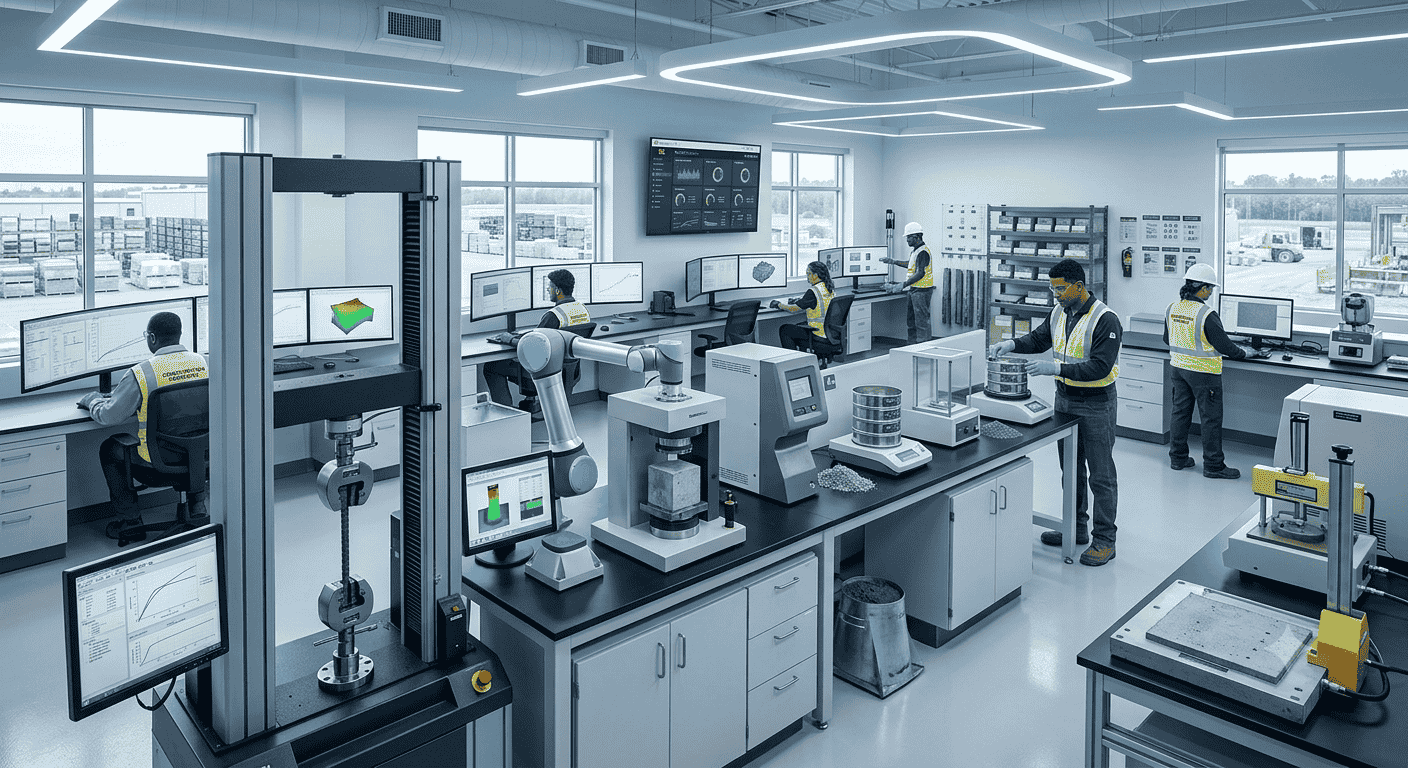
Quality, durability, and strength are vital for success in all projects within the construction industry. Right from residential buildings and commercial complexes to roads, bridges, and industrial constructions, the performance of construction materials can influence safety and reliability in the long term. It is due to this reason that Material Testing Equipment becomes crucial for current-day construction projects.
Material testing equipment plays an important role for construction firms, contractors, engineers, and quality assurance experts since it helps in checking whether materials used conform to required standards and project specifications. At Shivasscientific, we offer testing products that are reliable and help in quality control processes.
What Is Material Testing Equipment?
Material Testing Equipment refers to specialized laboratory and field instruments used to evaluate the physical, mechanical, and performance properties of construction materials. These machines help professionals measure characteristics such as strength, density, hardness, durability, moisture content, workability, and resistance to various forces.
Materials commonly tested include:
- Cement
- Concrete
- Aggregates
- Soil
- Bitumen and asphalt
- Bricks and blocks
- Steel and other construction metals
Testing these materials before and during construction helps identify potential quality issues and ensures that the selected materials are suitable for their intended application.
Why Is Material Testing Important for Construction Companies?
Construction failures can result in significant financial losses, project delays, and serious safety risks. Proper material testing allows companies to identify weaknesses before materials are incorporated into a structure.
1. Ensures Material Quality
Testing helps determine whether construction materials meet specified quality requirements. For example, concrete testing can verify compressive strength, while aggregate testing can assess properties such as impact resistance and abrasion.
2. Improves Structural Safety
The strength and durability of a structure depend heavily on the quality of its materials. Regular testing provides engineers with reliable data for making informed construction decisions and reducing the possibility of material-related failures.
3. Supports Compliance With Standards
Construction projects often need to comply with national and international testing standards. Appropriate testing equipment allows laboratories and quality-control teams to perform tests according to applicable standards and project specifications.
4. Reduces Construction Costs
Testing materials at an early stage can help prevent costly repairs, replacements, and structural problems. By identifying unsuitable materials before they are used, construction companies can reduce waste and improve overall project efficiency.
Common Types of Material Testing Equipment
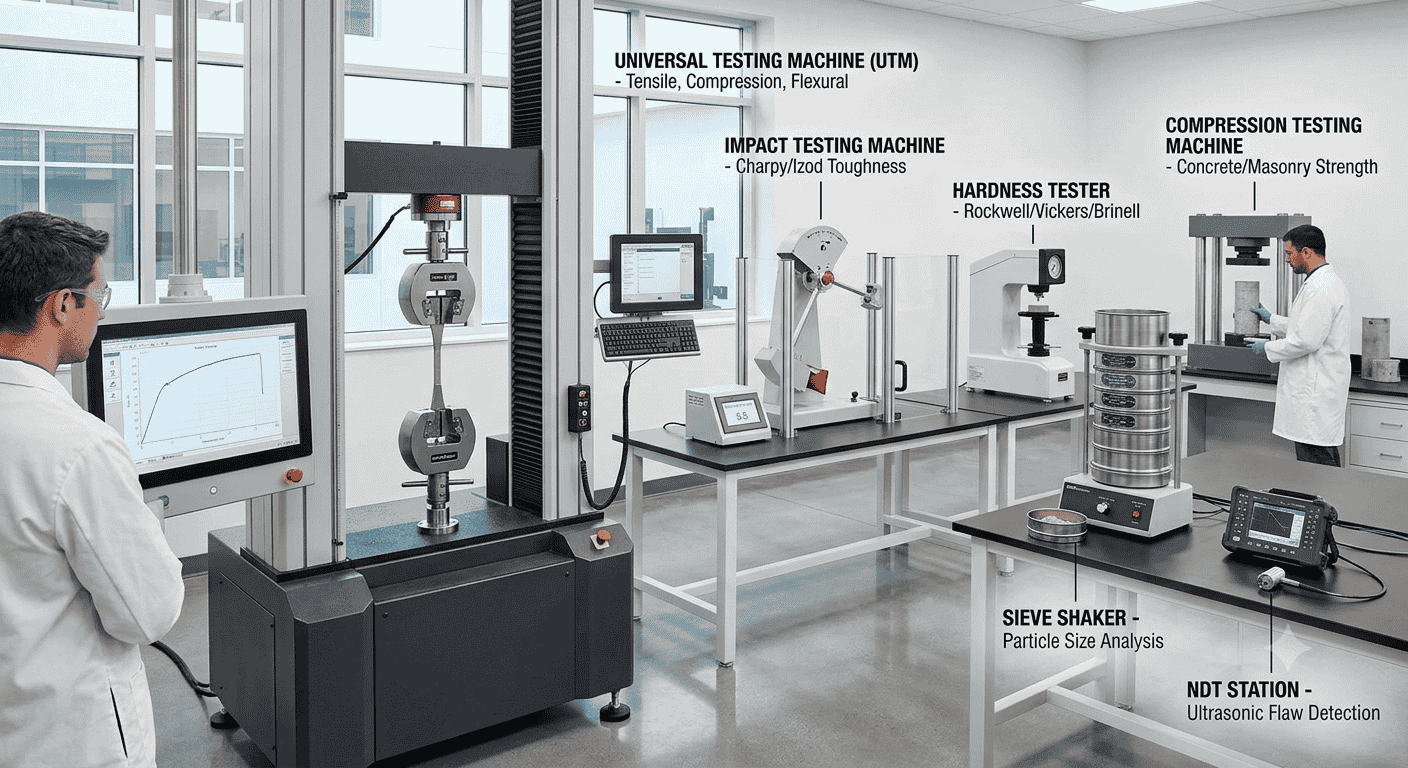
Different construction materials require different testing methods and instruments. Selecting the right equipment depends on the material being tested and the required test parameters.
Concrete Testing Equipment
Concrete testing equipment is used to evaluate the strength, workability, consistency, and durability of concrete. Common equipment includes:
- Compression Testing Machines
- Slump Cones
- Concrete Cube Moulds
- Flexural Testing Machines
- Concrete Permeability Testing Equipment
- Rebound Hammers
Compression testing machines, for example, are widely used to determine the compressive strength of concrete specimens.
Soil Testing Equipment
Soil testing is essential for foundations, roads, embankments, and other civil engineering applications. Soil testing equipment can be used to determine properties such as density, moisture content, compaction, shear strength, and bearing capacity.
Common equipment includes soil compaction apparatus, consolidation testing machines, direct shear apparatus, permeability testing equipment, and soil moisture testing instruments.
Aggregate Testing Equipment
Aggregates form a major component of concrete and road construction. Testing helps determine their suitability and durability.
Typical aggregate testing equipment includes aggregate impact testers, crushing value apparatus, Los Angeles abrasion testing machines, sieve shakers, and specific gravity testing equipment.
Cement Testing Equipment
Cement must possess appropriate physical and mechanical properties to produce reliable concrete and mortar. Cement testing equipment is commonly used to evaluate fineness, consistency, setting time, soundness, and strength.
How to Choose the Right Material Testing Equipment
Choosing testing equipment should not be based solely on price. Construction companies should consider several important factors before purchasing.
Testing requirements: Identify the exact properties that need to be measured and the tests required for the project.
Applicable standards: Ensure that the equipment is suitable for the relevant ASTM, IS, BS, EN, or other applicable standards.
Accuracy and reliability: Testing instruments should provide consistent and dependable results, particularly when test data is used for quality-control decisions.
Build quality: Construction and laboratory equipment should be manufactured using durable materials to withstand regular use.
Ease of operation: User-friendly equipment can reduce testing errors and improve laboratory productivity.
Calibration and service: Reliable calibration, maintenance, spare parts, and technical support are important for maintaining long-term testing accuracy.
Role of Testing Equipment in Quality Control
A strong quality-control system depends on reliable test results. Material testing equipment enables laboratories and construction companies to collect measurable data rather than relying solely on visual inspection or assumptions.
Test results can help engineers determine whether materials are suitable for a particular application, whether a batch meets project specifications, and whether construction processes are producing the expected results.
For large projects, maintaining proper testing records can also support quality documentation and project audits.

Why Choose Shivasscientific for Testing Equipment?
Shivasscientific aims at providing you with testing products of high quality for your laboratory or civil engineering purposes. We know the importance of using testing devices which are accurate, durable, and reliable in tough operating conditions.
The selection of testing machines from a reputable company can be very important for the quality control process if you want to set up a new testing laboratory for construction materials or to upgrade an old one.
Final Thoughts
Material Testing Equipment is an indispensable tool in the construction industry today. Testing of concrete and cement, soil and aggregates; the right testing equipment provides all the necessary information to assist engineers in decision making.
Construction companies need to make an investment in the right kind of testing equipment because it is not only necessary for the laboratory but it is also an investment in safety, minimizing risks from materials, adherence to standards and building long-lasting structures.
The right equipment, along with proper testing techniques and professionals, will ensure that construction companies have more confidence in each step of the process. Construction companies in search of quality material testing equipment can consider Shivas scientific.