The Future of Packaging Quality Control in the GCC: Trends & Innovations for 2026
The packaging industry of the GCC region is undergoing an extensive change. With increasing stringent environmental laws and preferences of environmentally friendly products by the consumers, the packaging companies are moving towards sustainable packaging. But sustainability is not sufficient; all the packages need to be strong, durable, and safe to use.
This is where Quality Control for Sustainable Packaging plays a vital role. Industries such as food & beverage, pharmaceutical, cosmetic, e-commerce, and consumer goods have to make sure that the sustainable packaging is as effective as conventional ones.
At Shivasscientific, we offer cutting edge packaging testing instruments which help the GCC packaging companies meet their quality requirements while maintaining sustainability. In our upcoming year of 2026, there are a number of evolving trends and technological advancements in packaging quality control.
Why Sustainable Packaging is Becoming the New Standard
The governments of the UAE, Saudi Arabia, Qatar, Oman, Bahrain, and Kuwait are actively promoting companies to reduce plastic waste and use environment-friendly packaging materials.
Today, the manufacturers are implementing:
- Recyclable packaging
- Biodegradable packaging
- Compostable packaging
- Paper packaging
- Lightweight flexible packaging
- Reusable packaging
Although all these packaging materials provide many advantages for the environment, their behavior during transport, storage, and handling is different from that of conventional packaging.
That is why Quality Control for Sustainable Packaging became an integral part of modern manufacturing processes.
The Rising Demand for Smarter Packaging Testing
Inspection methods that were used in the past are now not enough for modern packaging material innovation.
Modern manufacturers need complete testing to analyze:
- Compression strength
- Burst strength
- Tensile strength
- Sealing ability
- Water resistance
- Drop test performance
- Compression when stacked
- Environmental resistance
Through testing, manufacturers can determine weak points before product delivery to consumers.
Quality Control for Sustainable Packaging is Driving Innovation
As packaging materials evolve, testing technologies are becoming smarter and more automated.
Several innovations are changing how manufacturers approach quality assurance.
1. Automated Testing Systems
Automation is reducing human error while increasing testing accuracy and consistency.
Modern testing machines can automatically:
- Record data
- Generate reports
- Analyse trends
- Monitor production quality
- Improve repeatability
This helps manufacturers make faster and more informed quality decisions.
2. AI-Based Quality Inspection
Artificial Intelligence is becoming an important tool in packaging quality control.
AI-powered systems can detect:
- Surface defects
- Seal failures
- Dimensional variations
- Printing inconsistencies
- Packaging damage
These intelligent systems improve production efficiency while reducing inspection time.
3. Real-Time Quality Monitoring
Industry 4.0 technologies allow testing equipment to monitor production continuously.
Instead of waiting until production ends, manufacturers can now identify quality issues immediately.
Real-time monitoring offers benefits such as:
- Reduced waste
- Faster corrective action
- Improved consistency
- Lower production costs
Sustainability Requires Better Material Testing
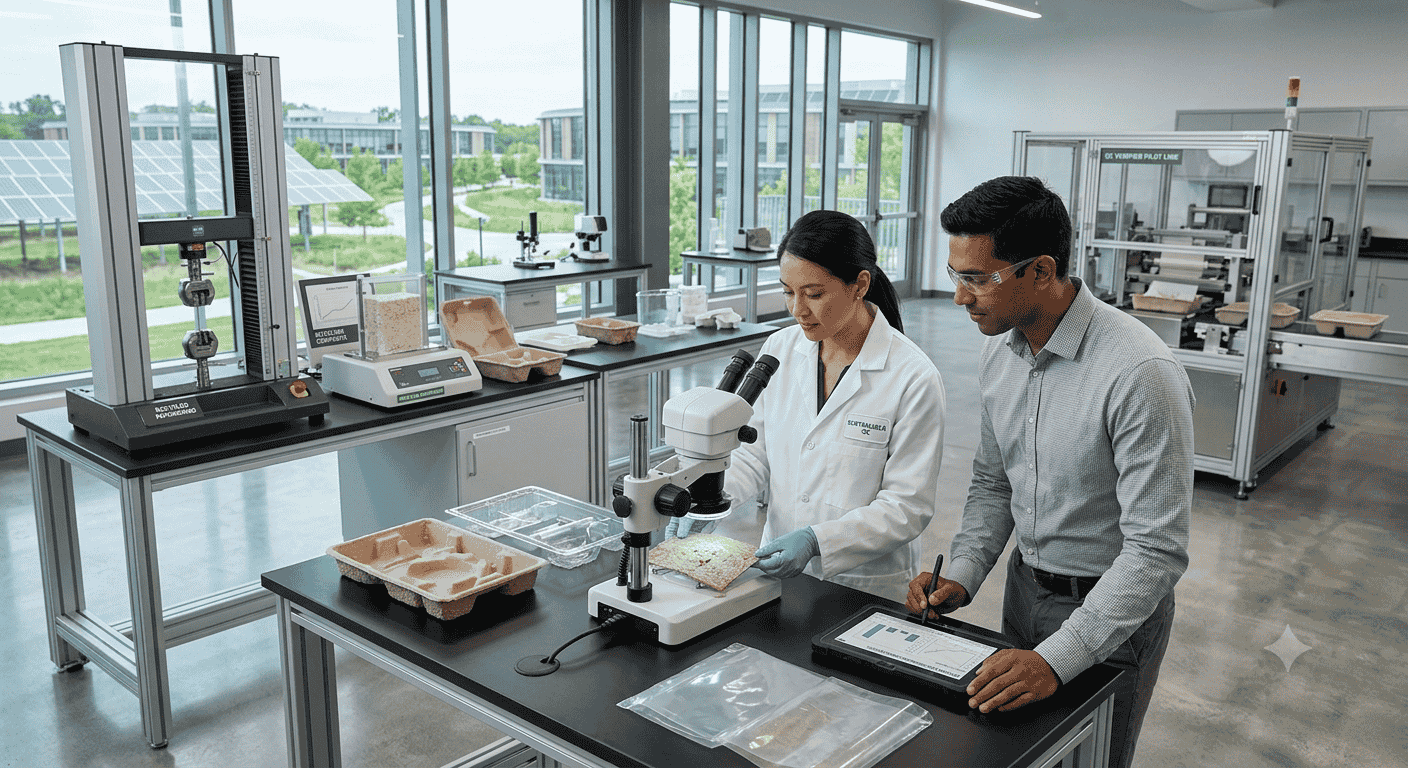
Eco-friendly materials often have different physical properties than conventional plastics.
For example:
- Paper packaging absorbs moisture more easily.
- Biodegradable plastics may have lower tensile strength.
- Compostable materials may behave differently during transportation.
- Recycled materials may vary between production batches.
Because of these variations, manufacturers need accurate laboratory testing before commercial production.
Testing ensures sustainable packaging remains reliable throughout the supply chain.
Industries Benefiting from Advanced Packaging Quality Control
Nearly every manufacturing sector in the GCC benefits from improved packaging testing.
Food & Beverage Industry
Food packaging must maintain freshness while protecting products from moisture, contamination, and physical damage.
Quality testing ensures compliance with food safety standards.
Pharmaceutical Industry
Medicines require packaging with excellent sealing performance and barrier protection.
Testing helps maintain product safety throughout storage and transportation.
Cosmetics Industry
Luxury cosmetic packaging must withstand handling while maintaining its premium appearance.
Testing improves durability and customer satisfaction.
E-commerce Businesses
With online shopping continuing to grow, packages experience multiple handling stages before reaching customers.
Compression, drop, and vibration testing help reduce transit damage.
Emerging Packaging Testing Trends for 2026
Several technological trends will define the future of packaging quality control in the GCC.
Digital Quality Reports
Paper-based reports are gradually being replaced by cloud-based digital reporting systems.
Manufacturers can easily:
- Store testing history
- Compare batches
- Generate compliance reports
- Share quality data with clients
Sustainable Material Validation
Before introducing eco-friendly packaging into production, manufacturers now perform extensive validation testing.
This includes:
These tests reduce business risks while supporting sustainability initiatives.
Smart Laboratories
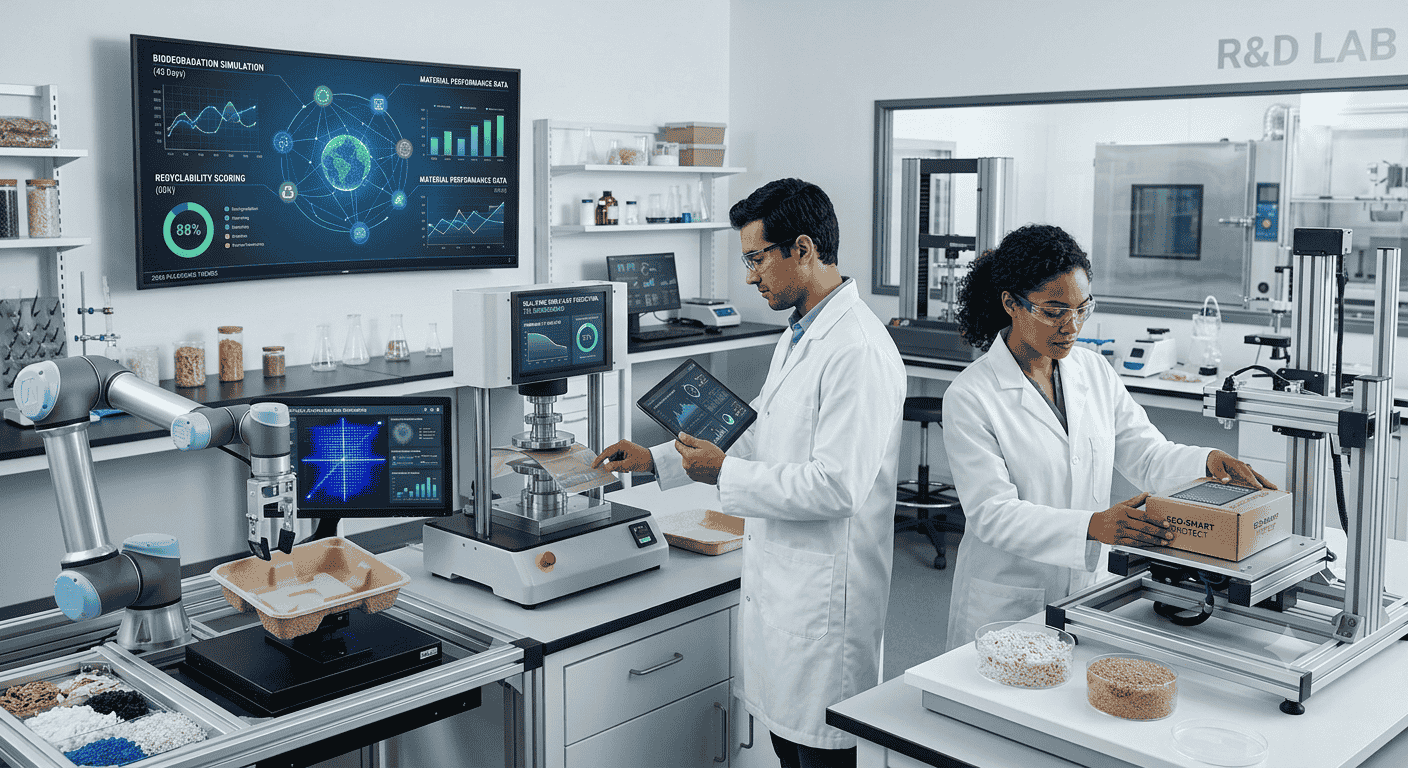
Laboratories are becoming increasingly connected through digital platforms.
Integrated software allows engineers to monitor multiple testing machines from a single dashboard, improving productivity and decision-making.
Choosing the Right Testing Equipment
Selecting appropriate testing equipment is just as important as selecting packaging materials.
Businesses should consider:
- Industry standards
- Material type
- Production volume
- Required testing methods
- Automation features
- Calibration support
- After-sales service
Partnering with a trusted supplier ensures long-term reliability and accurate testing performance.
Why Shivasscientific is the Preferred Testing Partner
At Shivasscientific, we understand the evolving needs of manufacturers across the GCC.
We offer a comprehensive range of advanced packaging testing equipment designed to support modern quality assurance requirements.
Our solutions help businesses:
- Improve product quality
- Reduce packaging failures
- Meet international testing standards
- Support sustainability initiatives
- Increase customer confidence
- Enhance manufacturing efficiency
Whether you manufacture flexible packaging, cartons, bottles, pharmaceutical packaging, or biodegradable materials, our experts can recommend the right testing solutions for your industry.
Conclusion
The future of packaging in the GCC is definitely leaning towards being sustainable, innovative and intelligent when it comes to manufacturing. But without proper testing, adopting environmentally friendly materials poses great threats to the quality.
Adopting Quality Control for Sustainable Packaging allows manufactures to ensure that the packaging produced will be reliable, compliant and most of all environmentally friendly.
As technology advances with automation, Artificial Intelligence, digital reporting and smart laboratories, quality control of packaging will be much more accurate and efficient in 2026 and beyond.
Shivas scientific is your number one provider for packaging testing solutions that will help improve the performance of your packaging while practicing sustainable manufacturing processes.